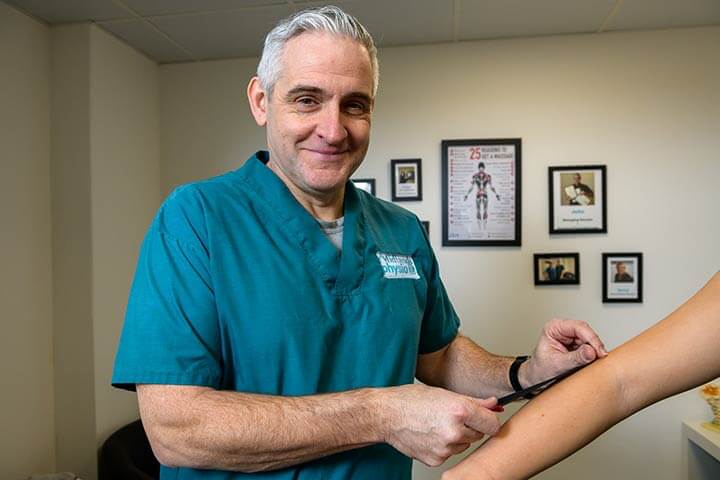
Do you find yourself unable to participate in your preferred physical activities due to pain, discomfort, or injury? If so, physiotherapy may be the solution you need. Whether it’s playing with your children or grandchildren, walking, or engaging in sports, a physiotherapist can help you reduce your pain and discomfort, and increase your mobility.
If you live in Halesowen and are struggling with pain, discomfort, or physical limitations, Midlands Physio can help. Our focus is on improving activity levels and restoring mobility through physiotherapy. We work with individuals of all ages and abilities and provide customised treatment plans to suit your specific needs.
Our team of physiotherapists use evidence-based techniques to assess and treat a variety of conditions, including sports injuries, joint pain, postural problems, and chronic pain. We use a combination of manual therapy, exercise prescription, and other interventions to help you achieve your goals and improve your quality of life.
Physiotherapy Halesowen – Midlands Physiotherapy
Midlands Physiotherapy and Sports Injury Clinic operated by Physiotherapist John Pryce & his team of Physiotherapists, Sports Therapists and Massage Therapists have been proudly servicing the Halesowen community, for over 20 years.
If pain or physical restrictions are preventing you from engaging in your favourite activities, don’t hesitate to contact Midlands Physio. Our team can help you restore your mobility and enhance your overall health and wellbeing.
What Does a Chartered Physiotherapist Do?
A Chartered Physiotherapist is a healthcare professional who specialises in the assessment, diagnosis, and treatment of injuries, diseases, and conditions that affect the musculoskeletal, neurological, and respiratory systems. They use a range of techniques to correct and improve the body’s natural healing mechanisms, without the need for medication or drugs, unless prescribed by a doctor. Their ultimate goal is to help patients achieve optimal physical function and quality of life.
A Chartered Physiotherapist can help with a variety of conditions, including back pain, neck pain, sports injuries, shoulder pain, whiplash, sciatica, headache, knee pain, and others. They begin by conducting a comprehensive evaluation of the patient’s condition, taking into account their medical history and current symptoms. Based on this, they design a personalised treatment plan that aims to meet the patient’s specific needs and goals.
Chartered Physiotherapists work with patients of all ages, using a range of techniques such as manual therapy, exercise prescription, education and advice on lifestyle and ergonomics to help patients recover from injuries, manage chronic pain, and improve their physical function. By working closely with patients, monitoring their progress and adjusting treatment plans as necessary, Chartered Physiotherapists help patients achieve their goals and improve their overall health and wellbeing.
What Conditions Can Be Treated by a Physiotherapist?
A physiotherapist can help treat a variety of conditions that affect the musculoskeletal, neurological, and respiratory systems. Examples of the conditions that can be treated by a physiotherapist include spinal problems such as back pain, sciatica, and stiff/painful neck; joint problems such as arthritis, injury, and pain/swelling/stiffness in joints like shoulders, hips, and ankles; and injuries to muscle, ligaments, cartilage, and tendons, including conditions like Repetitive Strain Injury (RSI).
Physiotherapy can also assist with post-surgical rehabilitation, including rehabilitation after orthopaedic surgery like hip and knee surgery, and general physiotherapy after general surgery. Additionally, physiotherapy can help with fractures by increasing the healing rate and aiding in the regaining of full function once the bones have healed.
Having knowledge about the different conditions that physiotherapy can aid with can be helpful in determining whether it is an appropriate treatment choice for your specific needs.
Spinal Problems
Including disc problems, degeneration, back, sciatica, lumbago, stiff/painful neck and referred arm and leg pains.
Joint Problems
Arthritis, injury, pain / swelling / stiffness in joints such as shoulders, elbows, wrists, hips, knees and ankles.
Injuries
To muscle, ligaments, cartilage and tendon problems; and related to conditions such as Repetitive Strain Injury (RSI).
After Surgery
Rehabilitation after orthopaedic surgery e.g., hip and knee surgery, or general physiotherapy after general surgery.
Fractures
Treatment to increase the healing rate and to gain full function once the bones have healed.
Spinal Problems
Physiotherapy can help with various spinal problems, such as disc problems, degeneration, back pain, sciatica, lumbago, stiff/painful neck, and referred arm and leg pains.
Joint Problems
Arthritis, injury, pain / swelling / stiffness in joints such as shoulders, elbows, wrists, hips, knees and ankles.
Injuries
Injuries to muscle, ligaments, cartilage, and tendon problems, including conditions like Repetitive Strain Injury (RSI).
After Surgery
Rehabilitation after orthopaedic surgery e.g. hip and knee surgery, or general physiotherapy after general surgery.
Fractures
Treatment to accelerate the healing rate and regain full function once bones have healed.
What To Expect from Your Physio Appointment
During a typical physiotherapy session, the patient will undergo an initial consultation that involves taking a detailed personal history and a history of the condition to be treated. A treatment plan will then be determined.
Treatment may involve:
Manual Therapy
Muscle imbalance and stability work
Personal rehabilitation exercise programmes
Soft tissue mobilisations
Gait analysis
Acupuncture
During the initial consultation, if it is determined that further sessions are required, we will discuss the details with you, provide an estimated timeframe for recovery, and allow you to decide how to proceed.